
Un, der, el: a printable worksheet on the article of nouns
A picture, and under it the little words of its language: “un” and “une” in French, “der”, “die” and “das” in German, “el” and “la” in Spanish. The child names the picture with its article, then circles the right one. English nouns have no gender: the worksheet is for these three languages.
Free, no account needed. Opens in your browser.
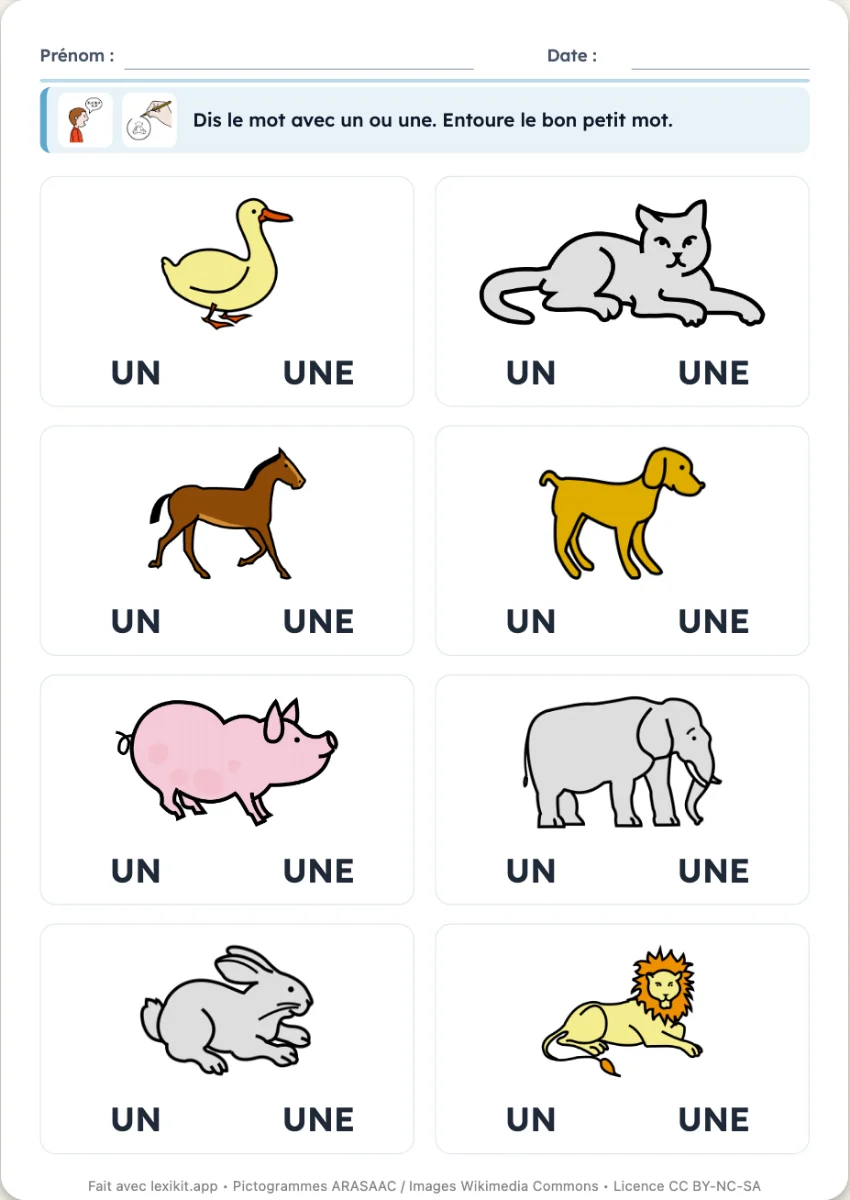
In 3 steps
- Add your words: nouns in French, German or Spanish, typed, pasted or taken from a theme.
- Choose whether to show the word under the picture.
- Print: name, date and illustrated instruction are already at the top.
What you can set
- French (un, une), German (der, die, das) or Spanish (el, la), from the language of the words
- Word under the picture, or the picture alone
- Handwriting style: capitals, print or cursive
- Size of the worksheet and answer key
- On screen: the child touches the article, and the voice says the word with it
Ways to use it
- Learning French, German or Spanish as a new language
- Naming with the right article, in spoken language
- A speech therapy session on gender
Frequently asked questions
Where does the gender of the words come from?
From open dictionaries: the Lexique 3.83 database for French, Wiktionary for German and Spanish. Nouns of several genders and plurals are left out, and the preview lists them. You can correct a gender in the word's window.
With the same words
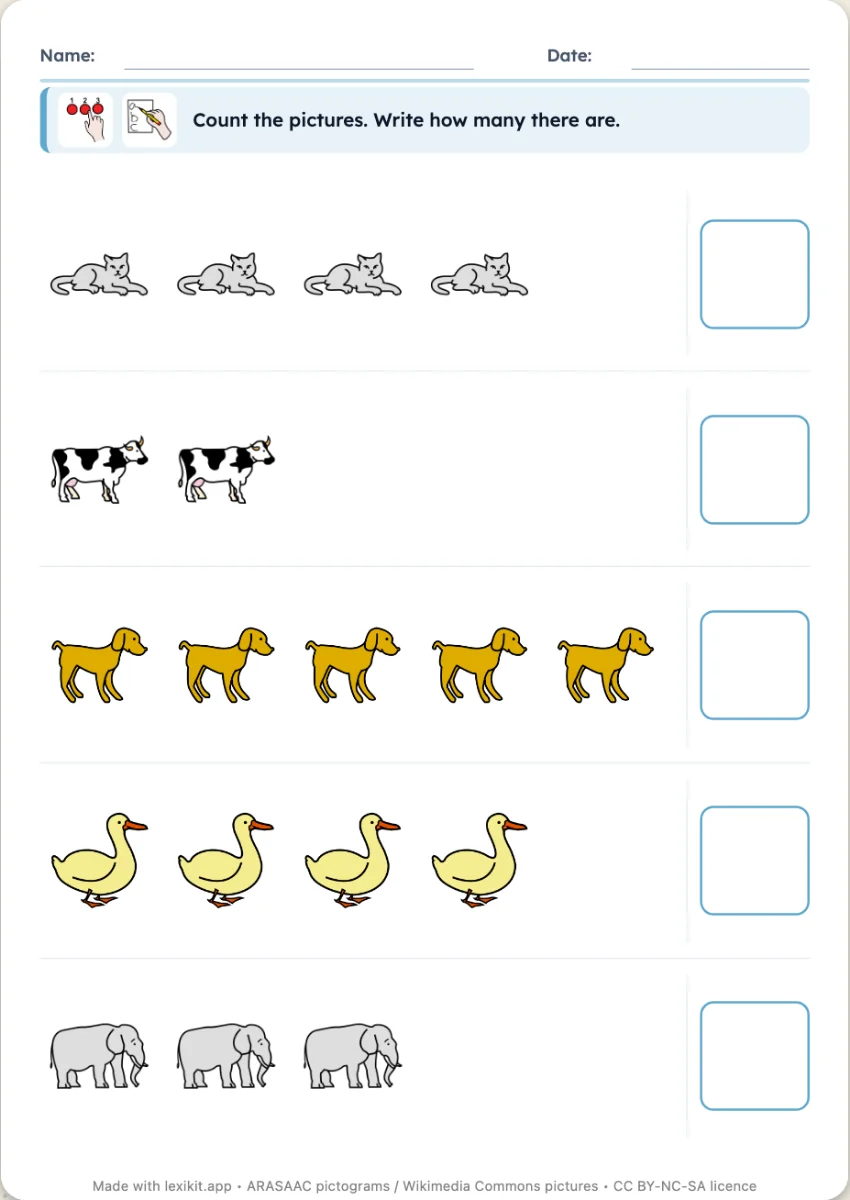 CountingSay the word, then count the picture repeated on each row: write, circle or colour the number.
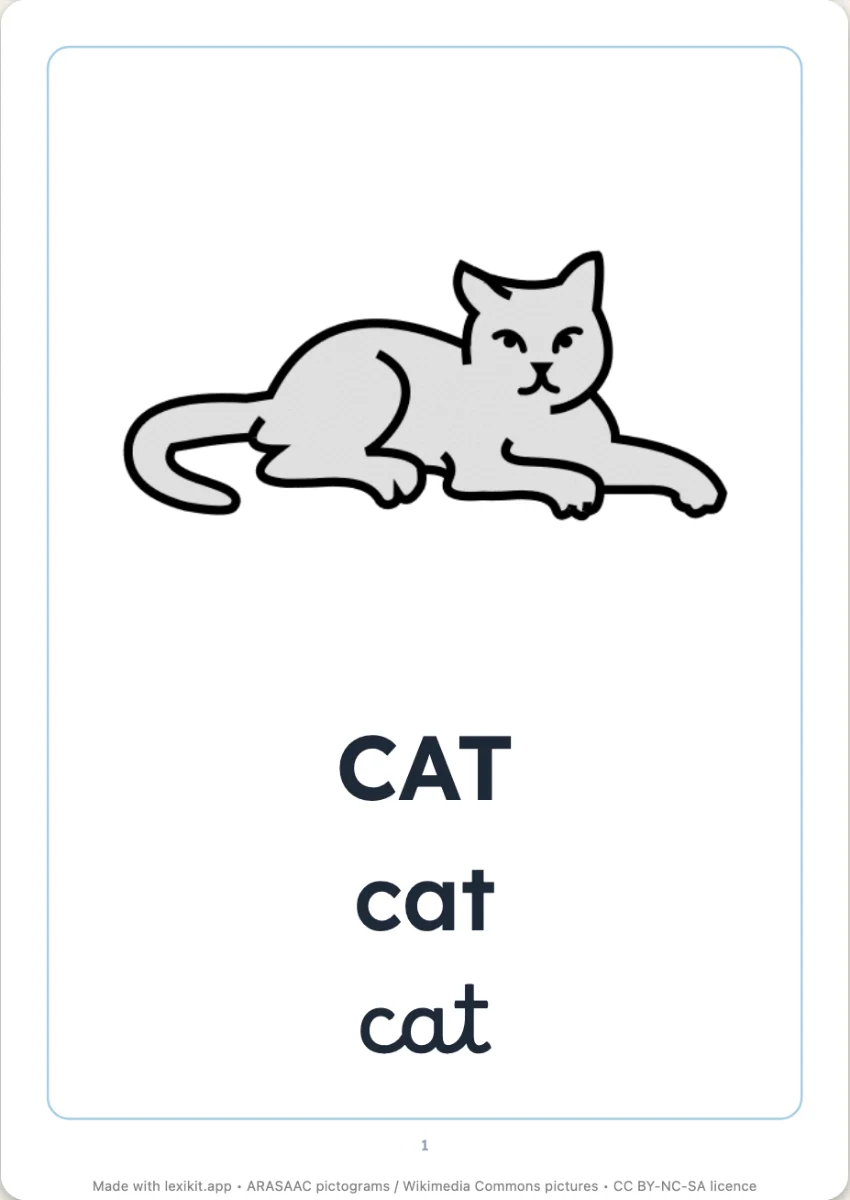 My picture dictionaryA real picture dictionary to bind: the cover, the contents, a picture and its word per page, in colour or to colour in.
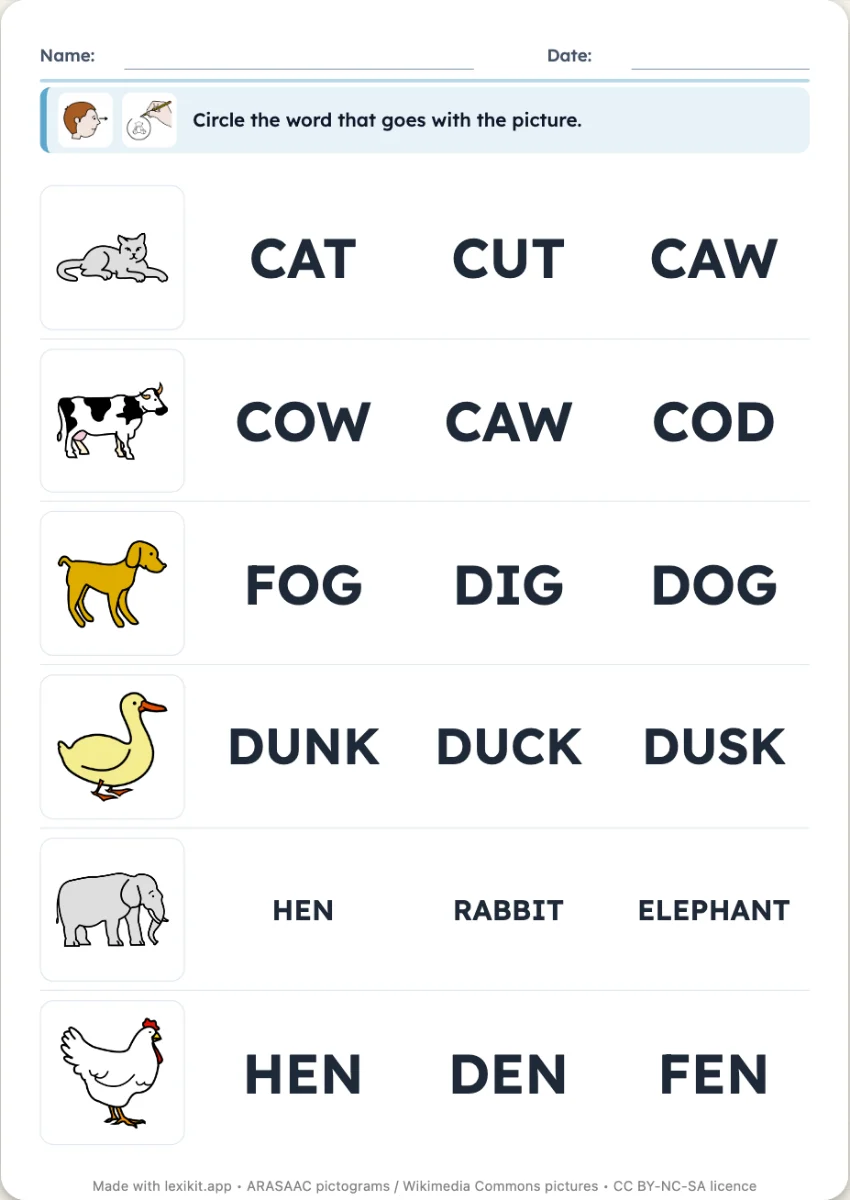 The right wordCircle the picture's word among real look-alike words: cat, cap, car.
Your turn
Open Lexikit, write your words, choose a resource: all that is left is to print. Free, no account, and your words stay on your device.
Create an article worksheet