A choice of determiner before nouns
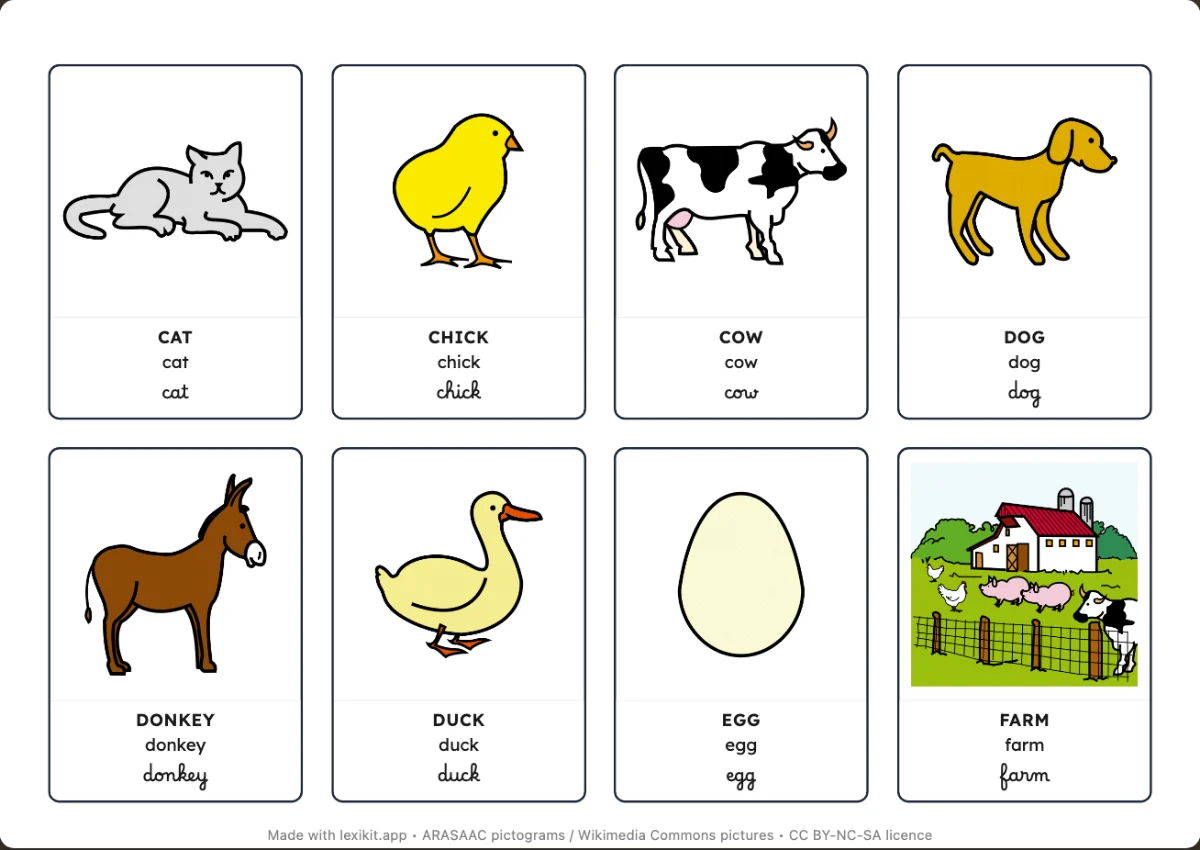
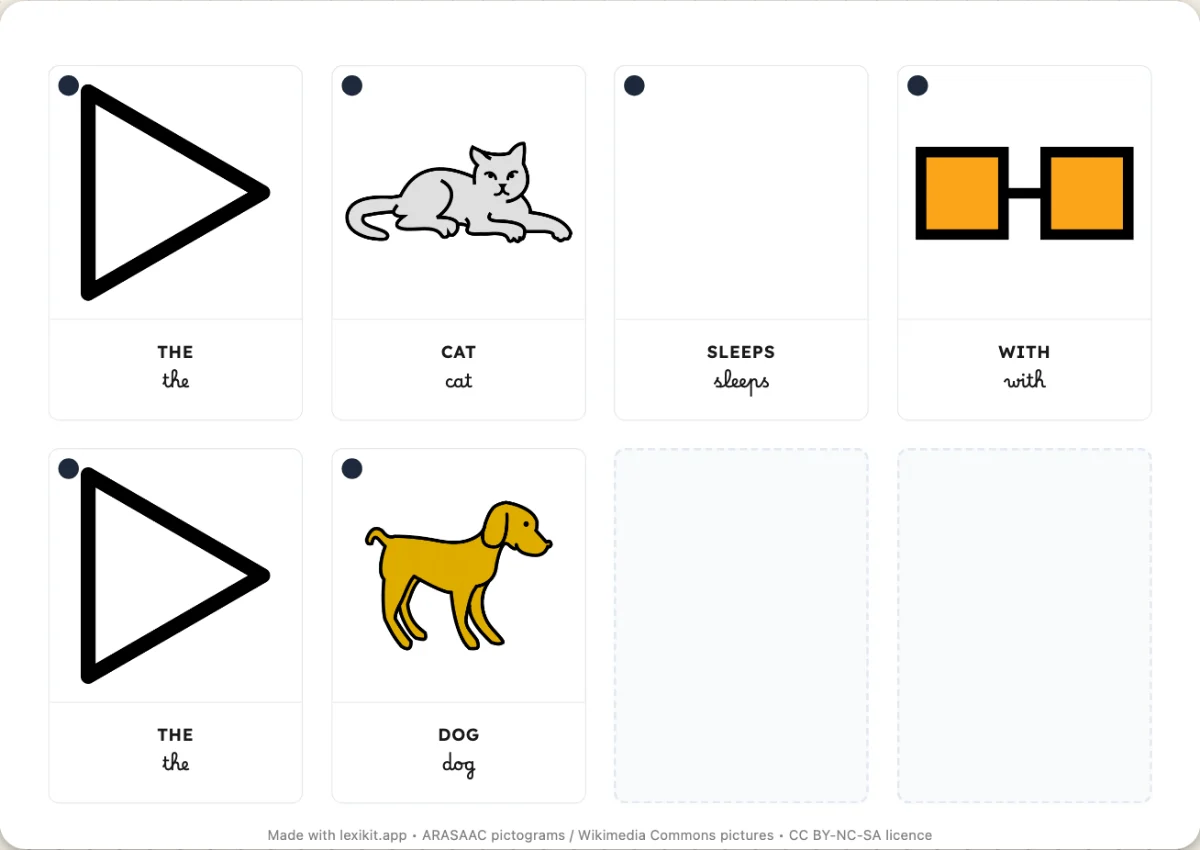
The “Determiner” option writes the nouns of the cards and games with “a, an”, “the”, “my” or “this”. One word can have its own.
On a bingo of the body, the expected answer is “my hand” or “my nose”. On a bingo of the family, “my dad” comes more naturally than “a dad”. The “Determiner” option, in the Format panel of the cards, the bingo, the memory game and the dominoes, now has “my” and “this” besides “a, an” and “the”. One word can also keep a different determiner from the rest of the resource.
The setting of the resource
“Determiner” is first set to “No” or “Yes”. With “No”, the words are written alone, as in the lexicon. With “Yes”, the “For all words” row appears, set to “a, an” at first. It gives the determiner of all the nouns of the resource: “a, an”, “the”, “my” or “this”.
Lexikit writes “an” before a vowel sound: “an apple”, “an hour”, “a unicorn”. A plural noun takes “the”, “my” or “these”, and no “a”. A mass noun such as “milk” stays alone with “a, an”. In French, the choices are “un, une”, “le, la”, “mon, ma” and “ce, cette”, with “l'avion”, “mon école” and “cet arbre” before a vowel. In Spanish, they are “un, una”, “el, la”, “mi” and “este, esta”.
A determiner for one word
In the word window, in the “In this resource” part, the “Determiner” row shows all the forms of the word: “dad”, “a dad”, “the dad”, “my dad” and “this dad”. The form of the resource is selected. Another form applies to this word only, in this resource. On a bingo set to “a, an”, “dad” can keep “my dad”. On a bingo of food, “chicken” can stay alone.
Under “For all words”, a line says how many words have a determiner of their own, with “Reset all”. Changing “For all words” also puts every word back on the same determiner. With “No”, the choices of the words stay saved without being printed, and they come back with “Yes”.
One person for the possessive
I kept one person, “my”. With “your”, “his”, “her” and “our”, the row would have had eight choices. The French partitive “du, de la” is not in “For all words”: Lexikit gives it to mass nouns in French, and another noun can take it in its window.
Gender does not always show
In French and Spanish, “un, une” and “le, la” show the gender of the noun. “Mon école”, “cet arbre” and “l'avion” do not. To work on gender, “un, une” stays the clearest setting.
Lexikit writes a determiner only before the nouns whose gender it knows. The other words stay alone. The gender of a noun is corrected in the word window, in the “The word” part, and then applies to all resources.