Themes that make sentences
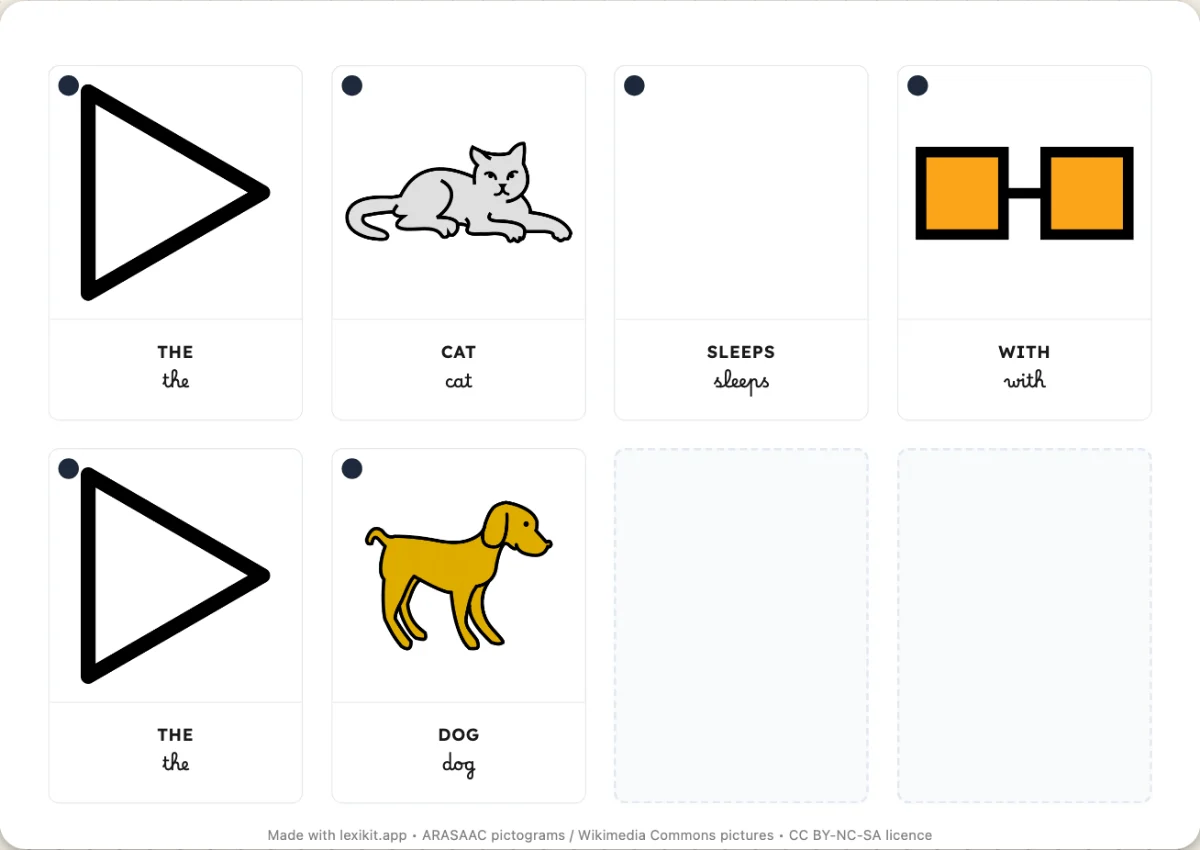
In the themes, every verb finds the words that make a sentence with it, and the ready sentences are laid with the cards of the factory.
A new game, a theme, more words, an activity, and the reason behind each choice: the logbook of Lexikit, version after version.
In the themes, every verb finds the words that make a sentence with it, and the ready sentences are laid with the cards of the factory.
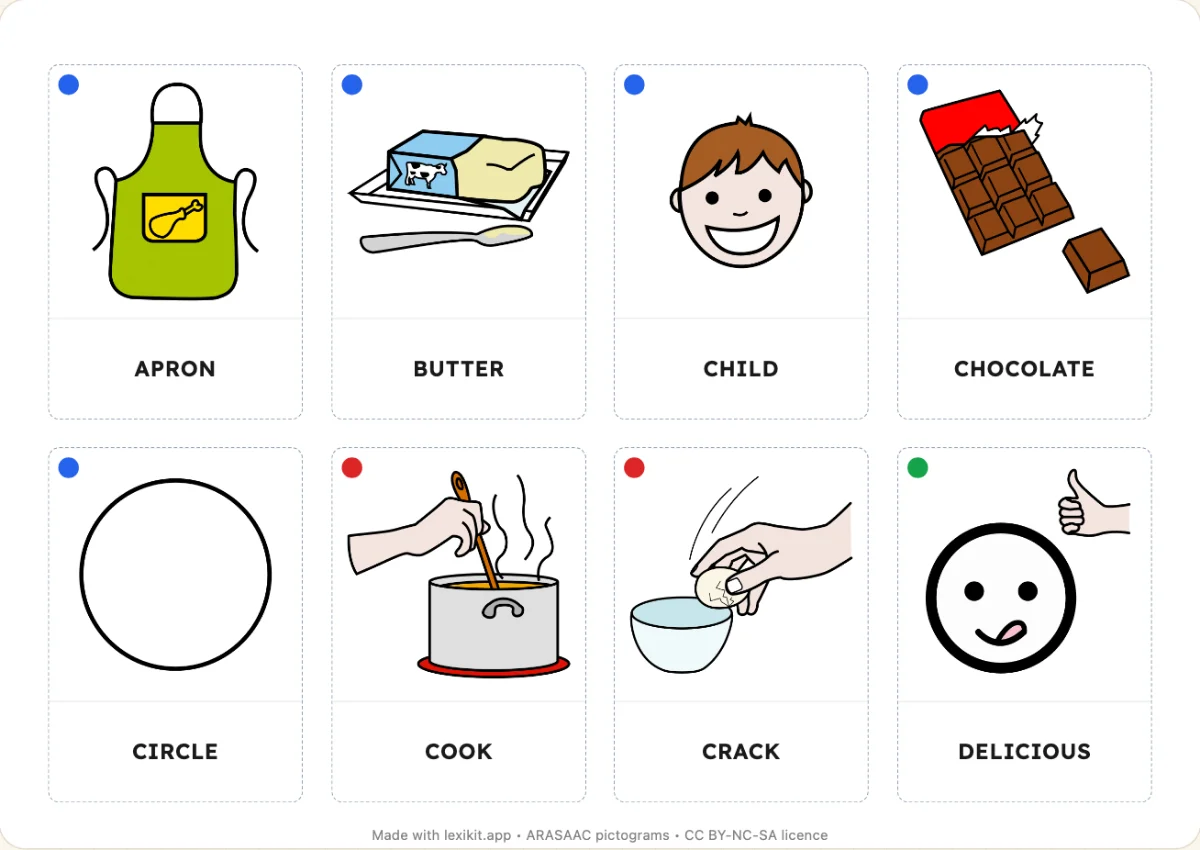
The words of a theme become sets of cards to cut out, with their determiners and their verbs, so that the child builds sentences of their own.
“Create a resource” sorts the resources in two paths, speaking and writing, which both end on sentences made with the words of the resource.
The writing path sorts the resources in four steps, from the word read to the word written in a sentence, after an Eduscol guide for CP.
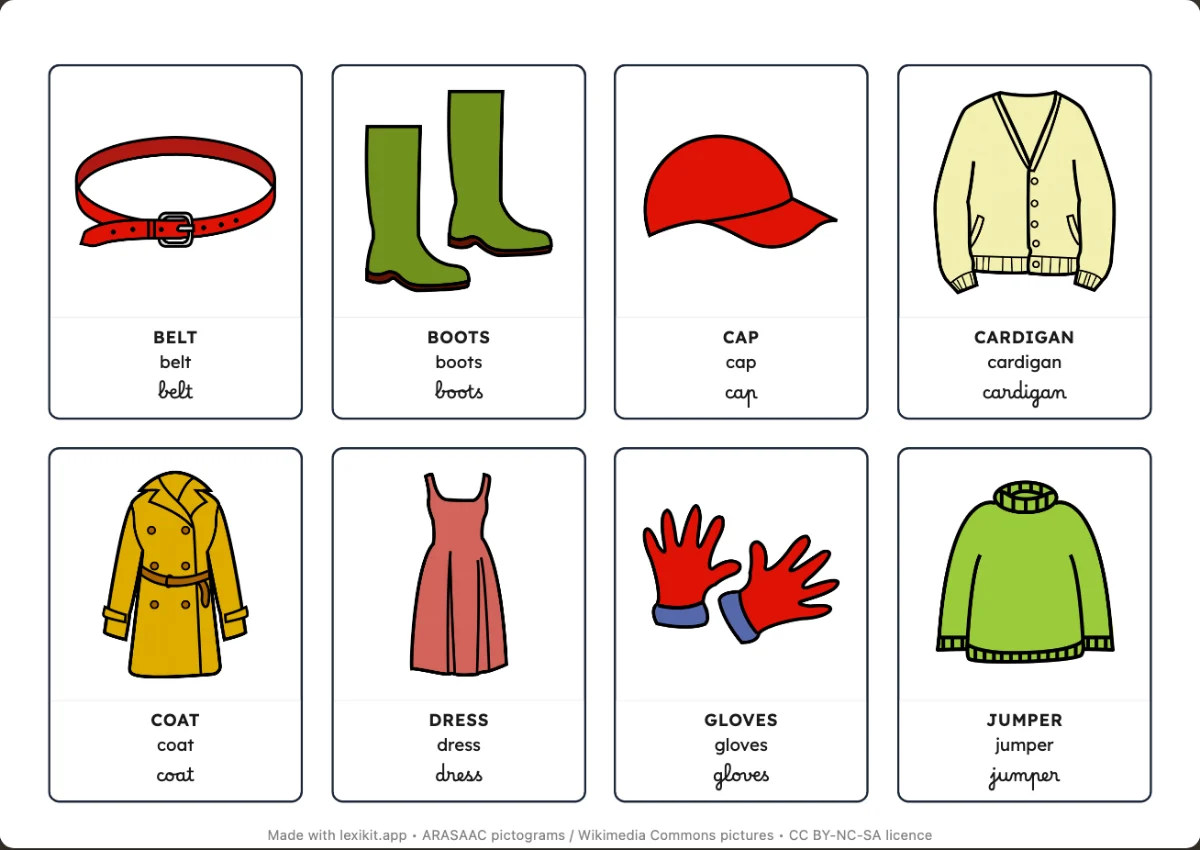
The “Determiner” option writes the nouns of the cards and games with “a, an”, “the”, “my” or “this”. One word can have its own.
The “Verbs” option writes the verbs of the cards and games with the pronoun of their picture: “he is cutting”, “she is jumping” or “they are dancing”.
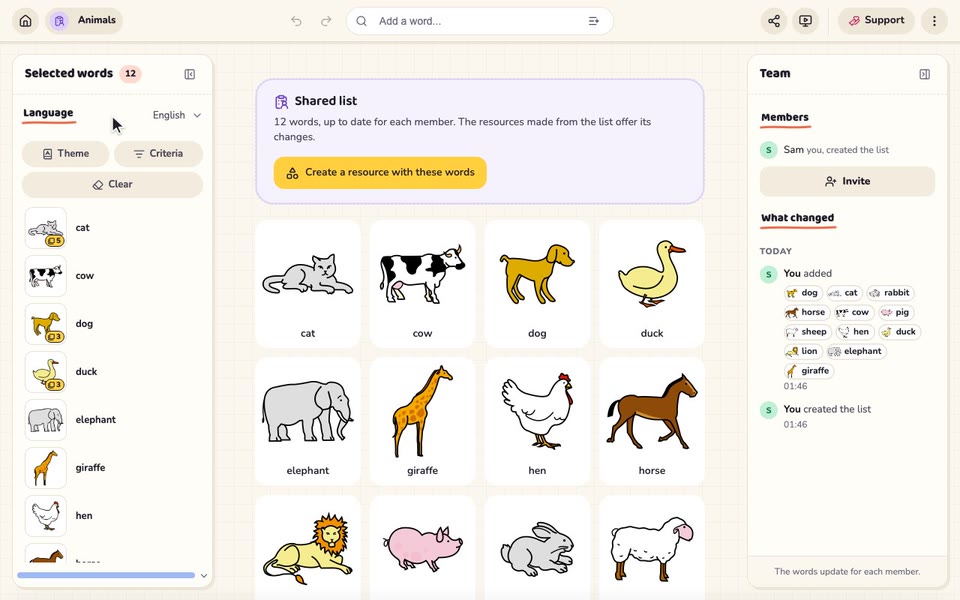
A word list common to a team, up to date for each member. Each person makes their own resources from it.
Cards can carry the word or the translation on the back, behind the picture. The child names the picture, turns the card over and checks.
Lexikit's themes mix more verbs, adjectives and a few expressions with their nouns, so that children can say sentences.
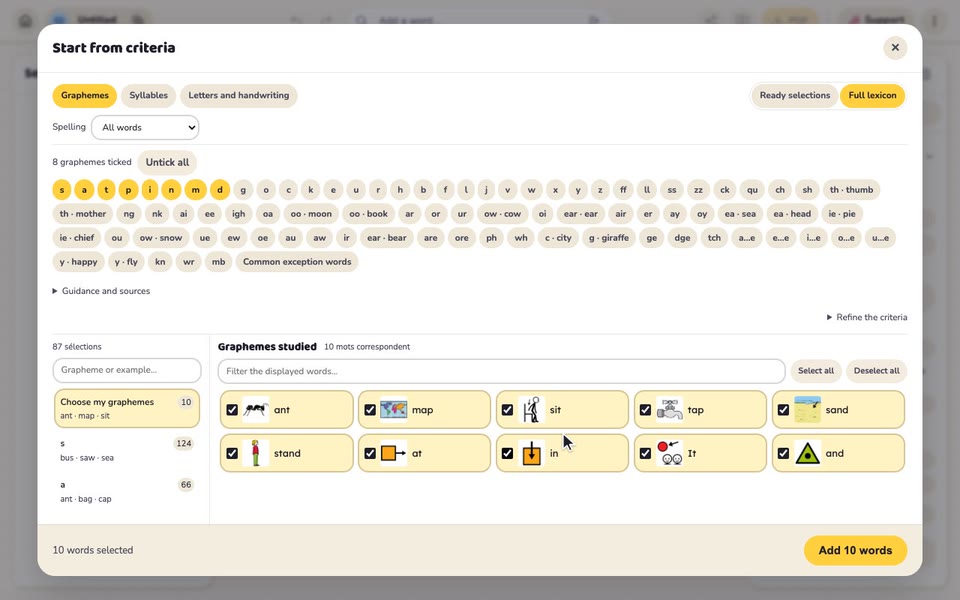
“Choose my graphemes” finds the illustrated words that can be read with the graphemes taught in class. “Transparent words” leaves out silent letters.
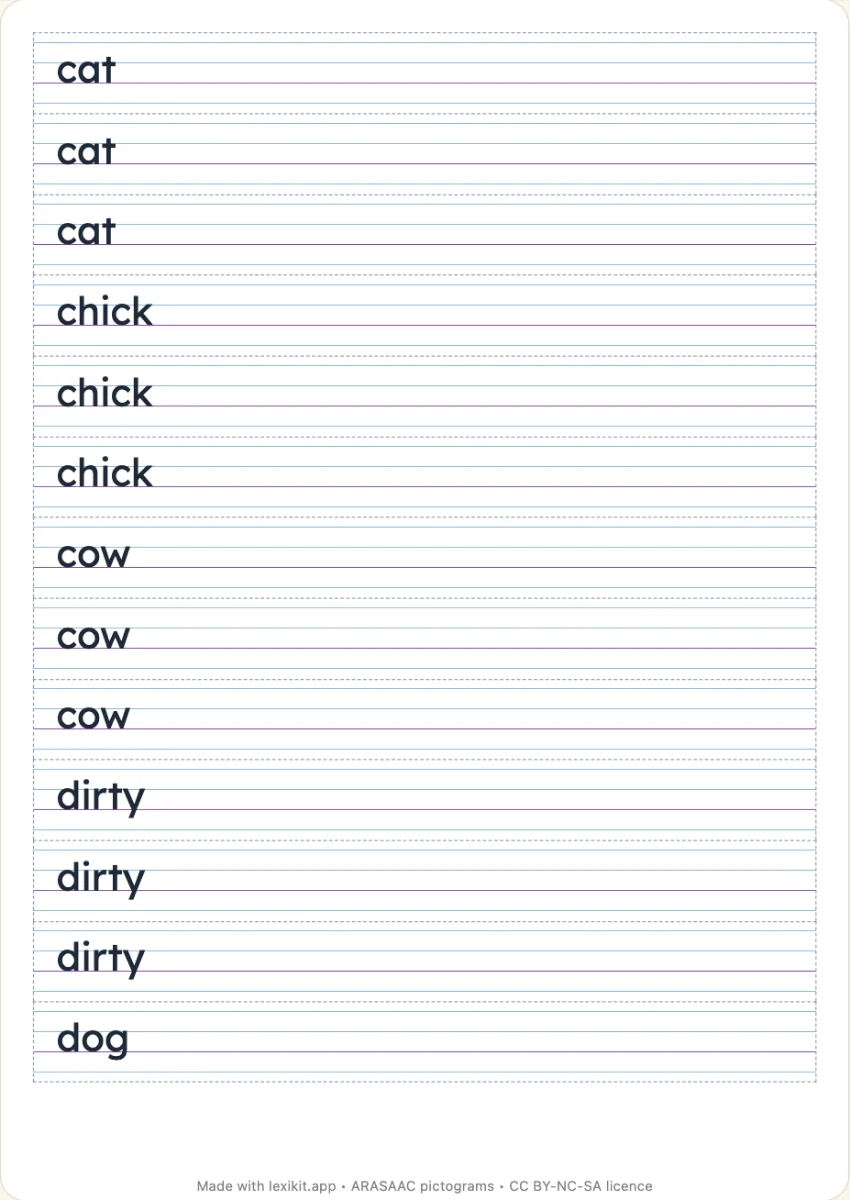
The “Handwriting models” resource writes each word or sentence on a strip to glue in the exercise book, on the class's handwriting lines and at their true size.
I reviewed every Lexikit resource against the French curriculum, the Eduscol guides and the inspectorate's report. Here is each change and the text behind it.
A noun now has its plural, and an adjective its feminine. In a sentence, “apples” finds the card of “apple” and its picture.
French verbs now conjugate in the passé composé, with the right auxiliary and participle agreement. The pronoun il, elle or on is chosen per card.
A child's report makes a resource of the words they missed last time. The same button gathers the missed words of the whole class.
The home screen and the themes window show the themes teachers chose most over the last seven days.
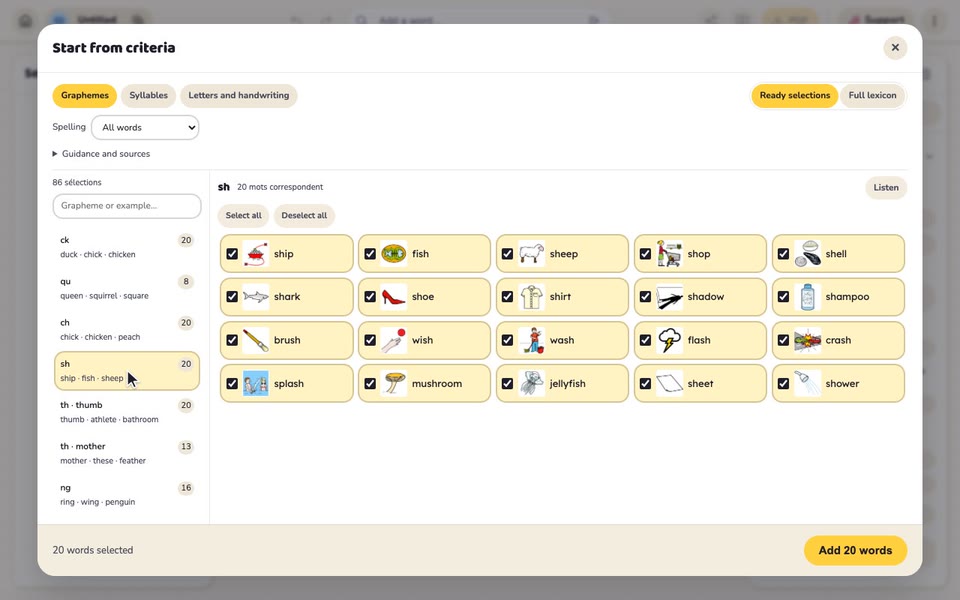
The “Start from criteria…” button chooses the words of a resource by grapheme, by syllable or by handwriting movement, in French, English and Spanish.
A verb keeps a single card in the lexicon. In a sentence, it takes the form you write, with its picture, in French, English and Spanish.
Two fonts adapted for school: letters that are easy to recognise, words clearly apart and a cursive that follows the French curricula.
Summer, birthdays, pancake day and Chinese New Year join the themes. Taste, music and the mountains now have their page and their moment in the year.
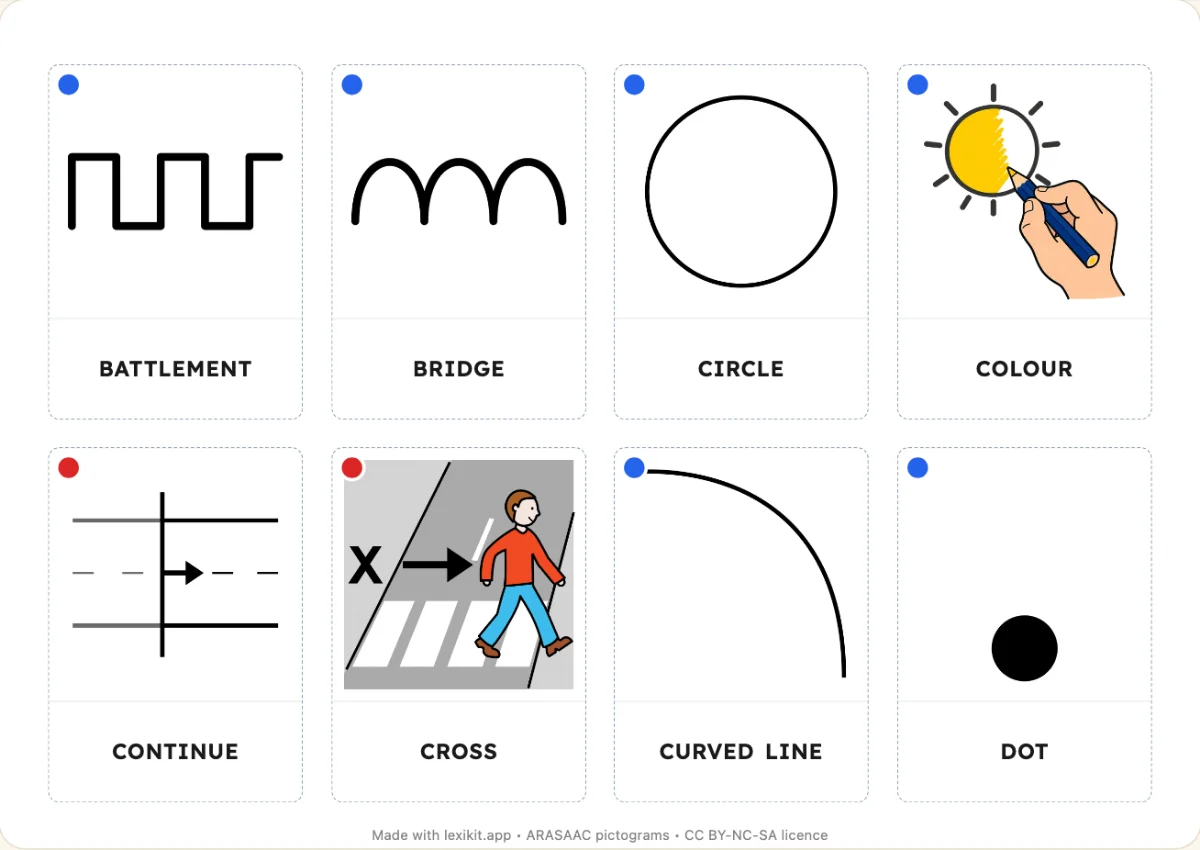
Three themes to print for the whole year: shapes, pre-writing strokes and the letters of the alphabet, as a picture dictionary, bingo and memory.
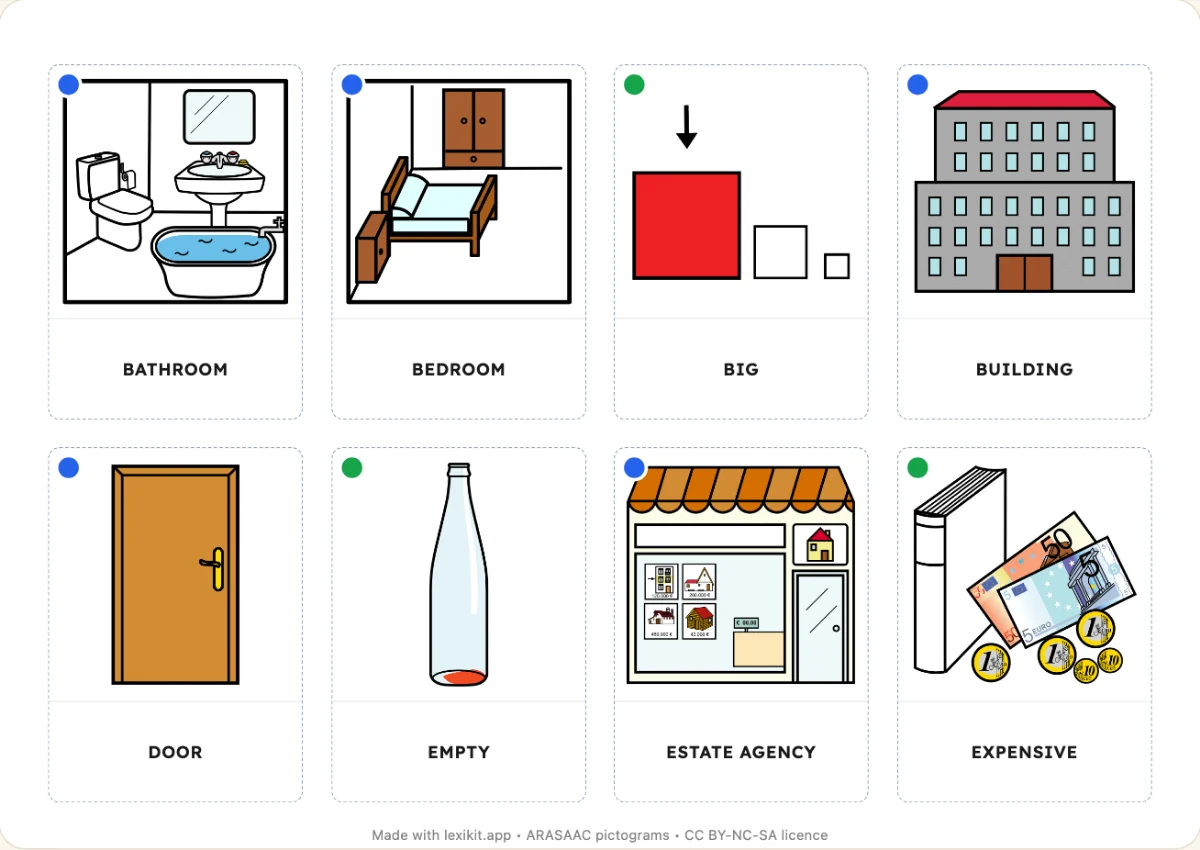
Nine themes support adults learning French in everyday situations: introducing yourself, renting a home, going to the town hall, looking for a job.
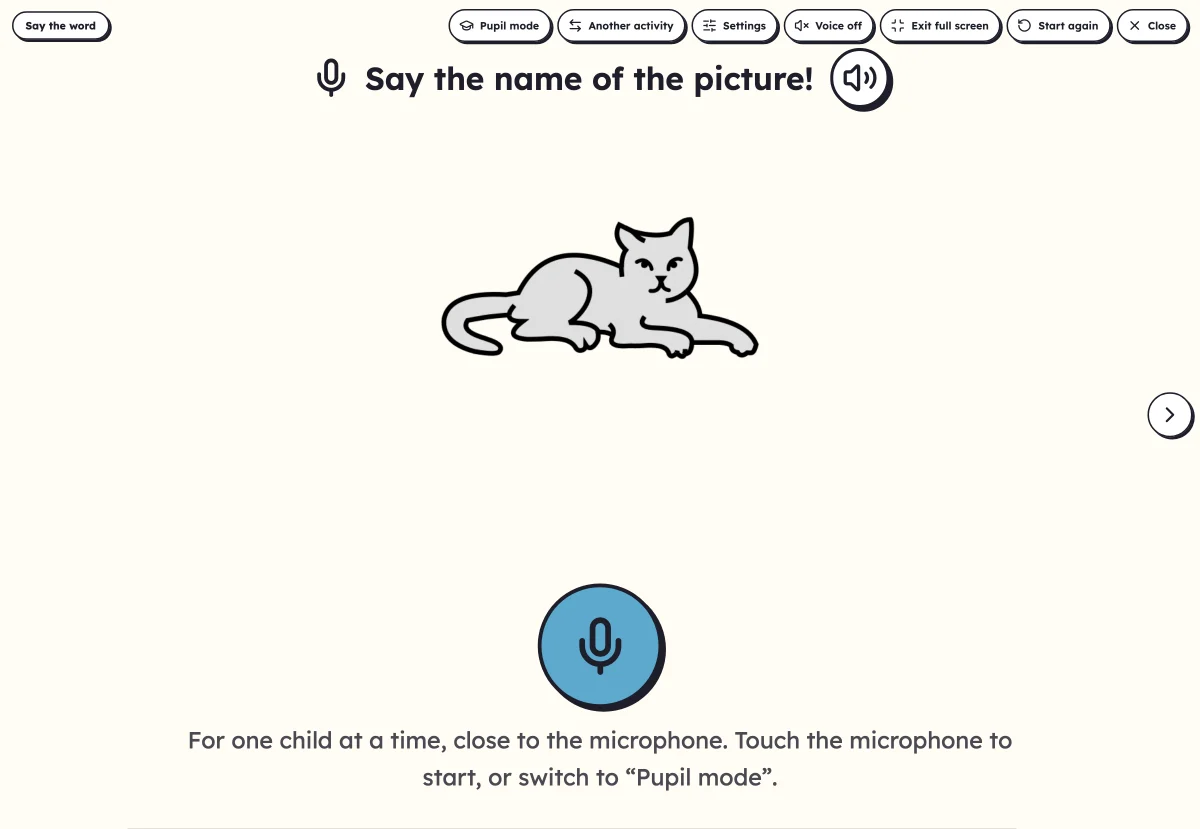
In the “Say the word” activity, the child names the picture into the microphone and Lexikit recognises the word. The sound does not leave the device.
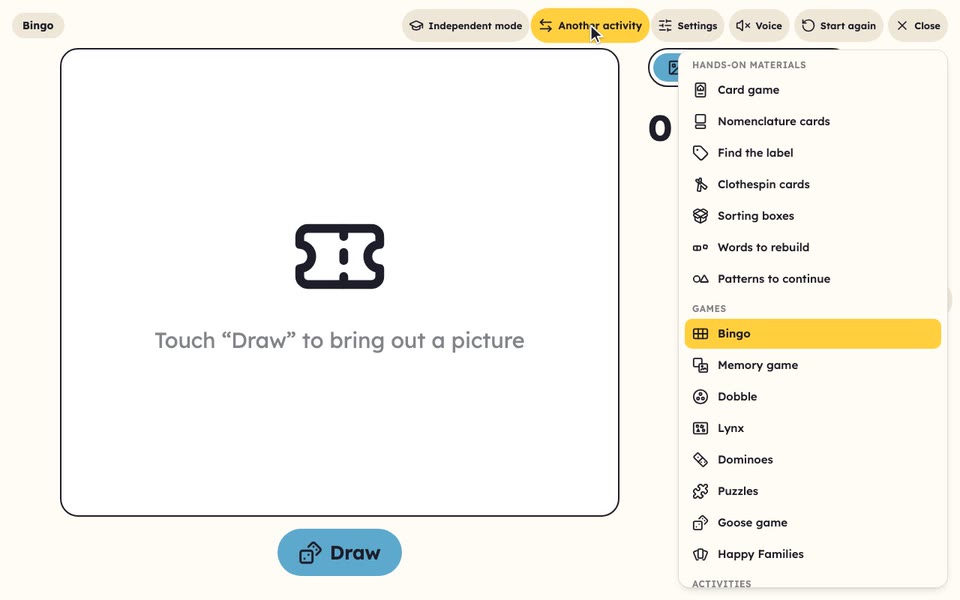
In full screen, the “Another activity” button lists every activity possible with the words of the resource. You go from bingo to memory without going back.
The French curriculum describes three stages for learning a word: understand, memorise, reuse. The activities of Lexikit follow them.
The lynx is an observation game. An A4 board gathers all the pictures scattered, each player draws a label, and the first to find the picture covers it.
Home, family, the classroom, colours and numbers: five lists ready to print as a picture dictionary, bingo and memory game.
The French lexicon receives the pictograms ARASAAC has published since January 2025: 366 new words and 160 more pictures.
The device's voice reads the words and the instructions. A second voice, MBROLA, says each syllable as it sounds within the word.
A single resource is used to sort words into boxes to cut out, by category, by part of speech, by number of syllables or by first letter.
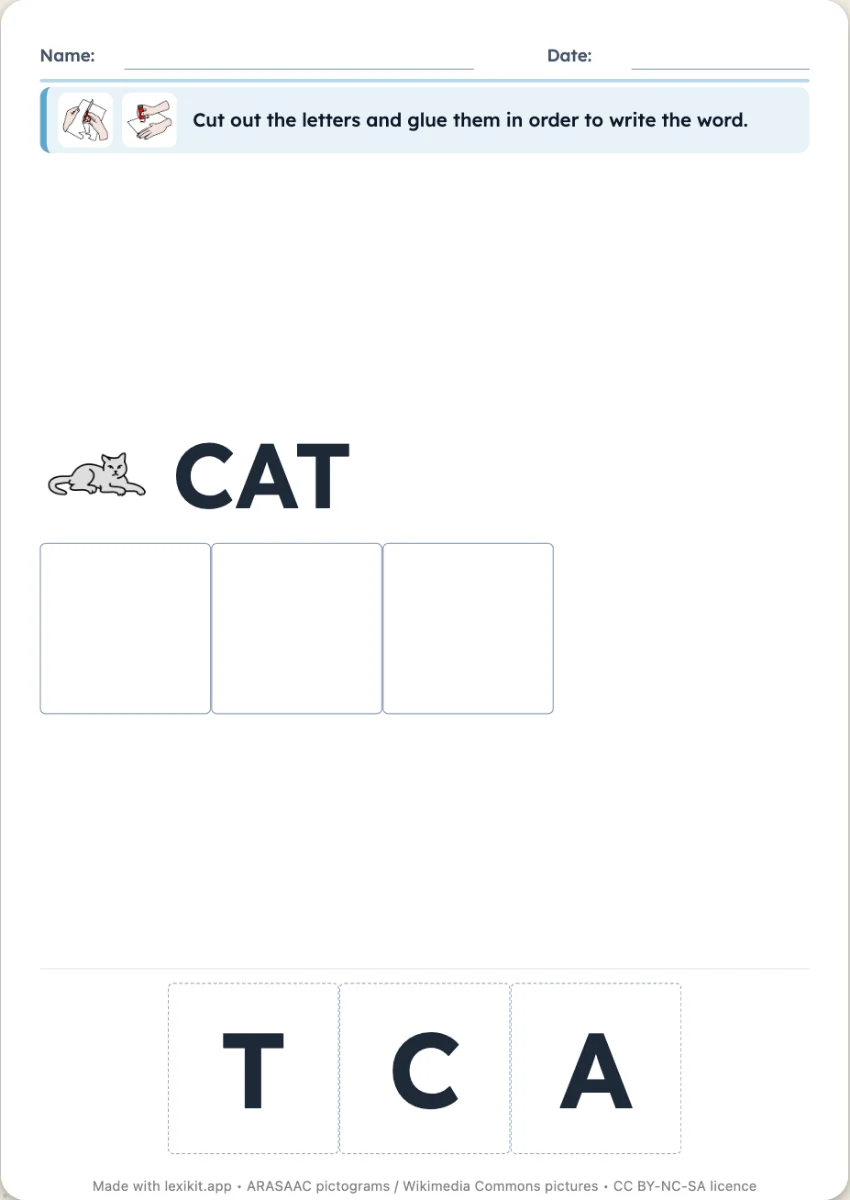
Two resources join the hands-on materials: boards to rebuild the words, and picture patterns to continue.
Every worksheet can have its answer key: the same sheet filled in red ink, at the end of the PDF or on the back.
The “At the swimming pool” theme gathers the words of a swimming lesson, from the changing room to the big pool, to prepare the trip with pictures.
642 word families and 29 pairs of synonyms join the French lexicon, all checked one by one.
In a vocabulary app, a mistake is learnt as well as a right word. Here is how Lexikit checks its words, its pictures and the links between them.
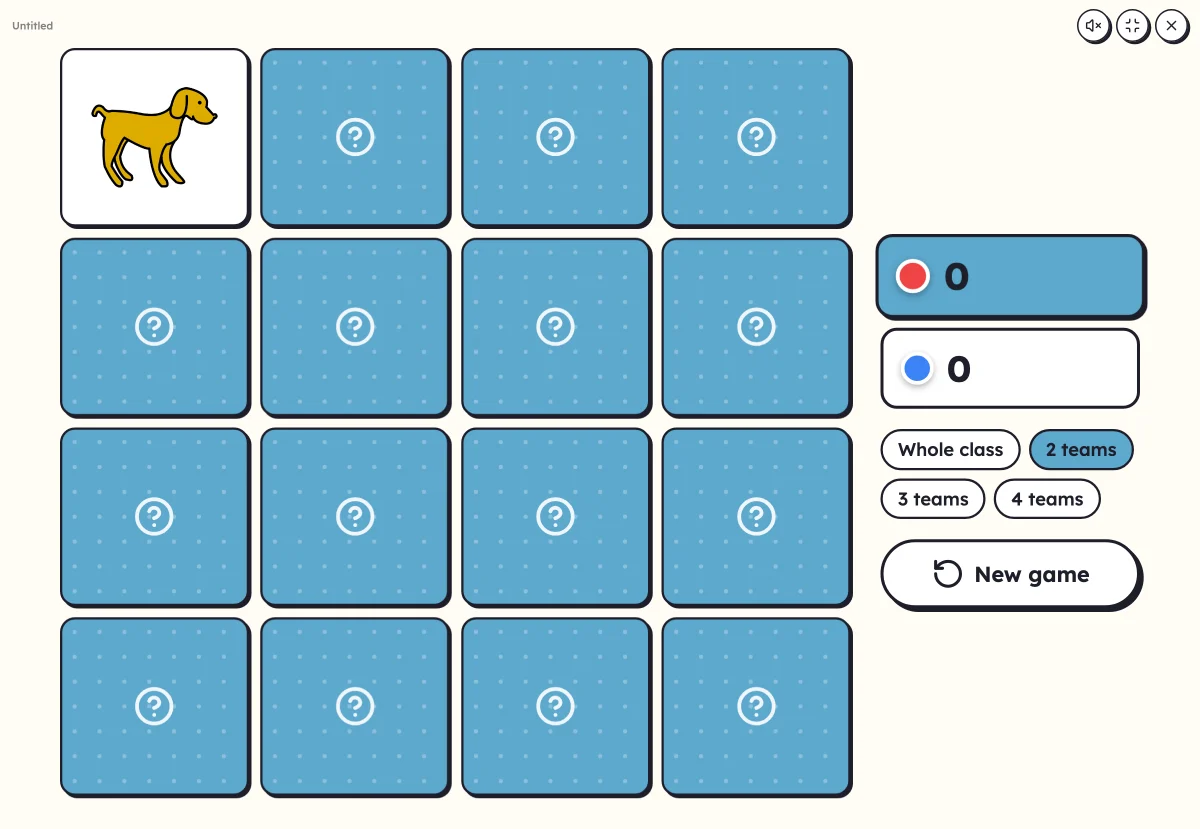
In full screen, one person plays alone on a tablet or a computer, with their first name, a level, two tries and a hint.
Six worksheets join the “Read” family, from recognising a letter to the little word that goes before the noun.
Lexikit makes a Happy Families game with your words: one family per category, each in its colour, with the family list on each card.
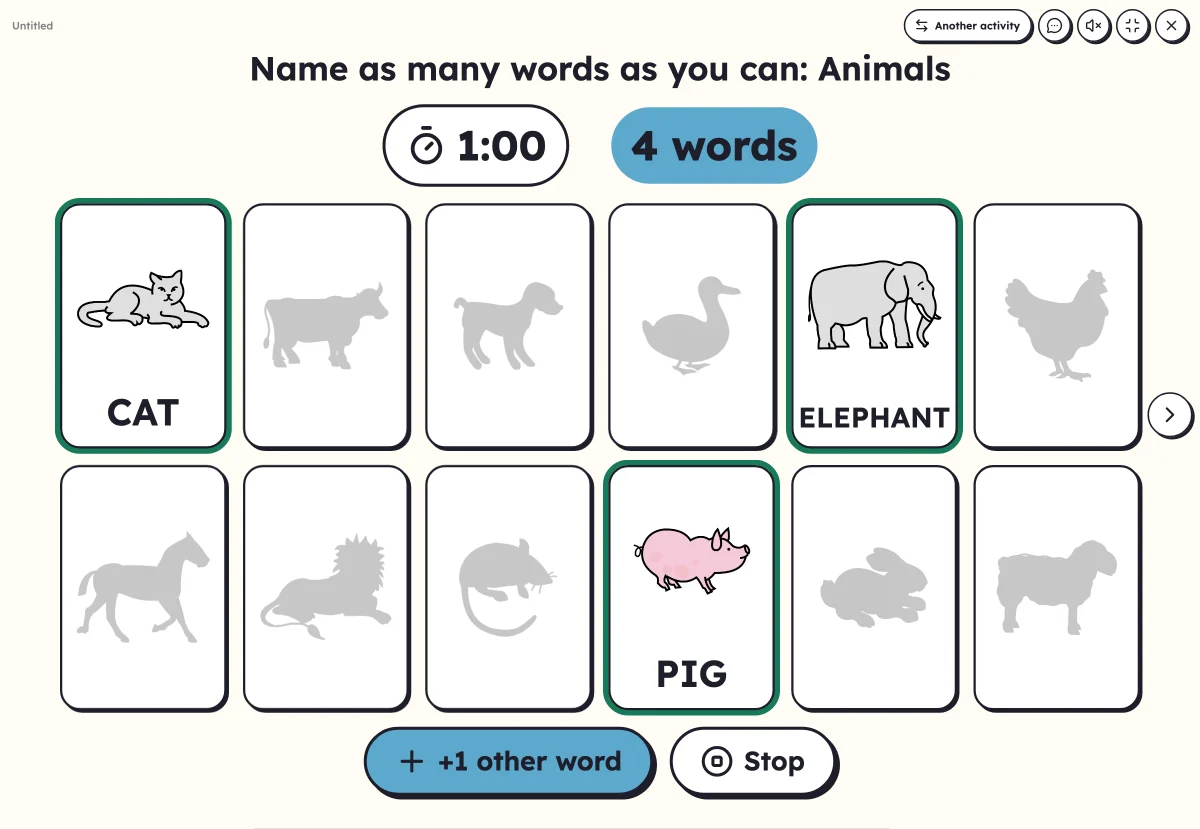
In the “In one minute!” activity, the class names as many words as possible before time runs out. Each word named is revealed on screen.
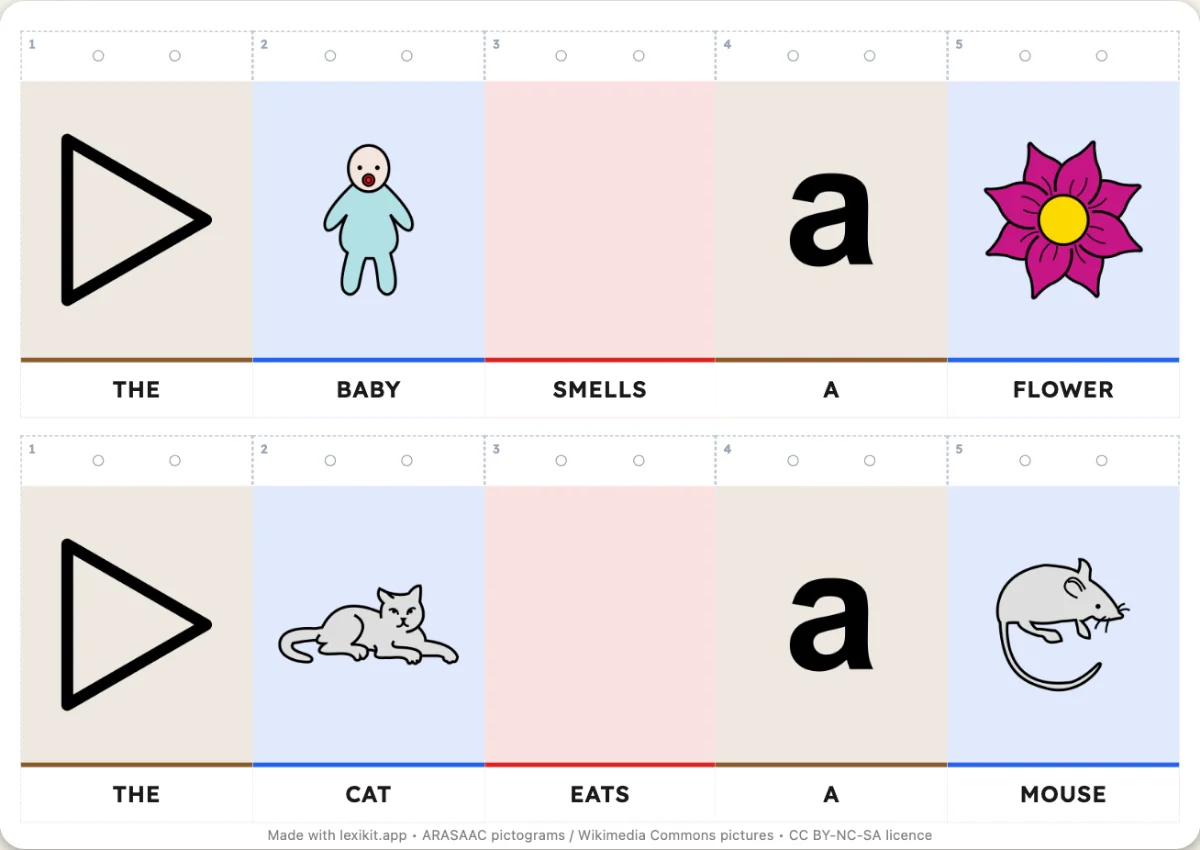
In this sentence resource, each sentence becomes a strip and each word an illustrated, numbered flap.
Worksheets, cards, puzzles, dominoes and Dobble also play in full screen, with the same words.
Lexikit now splits words as they are said: to·mate in two syllables, ba·llon. Before, it followed spelling and counted a sound the child does not say.
The themes of Lexikit now mix nouns, verbs and adjectives, because a vocabulary made only of nouns does not let you make sentences.
We quickly forget what we have just learnt, unless we see it again at the right time. What the psychology of memory has shown, and what Lexikit does with it.
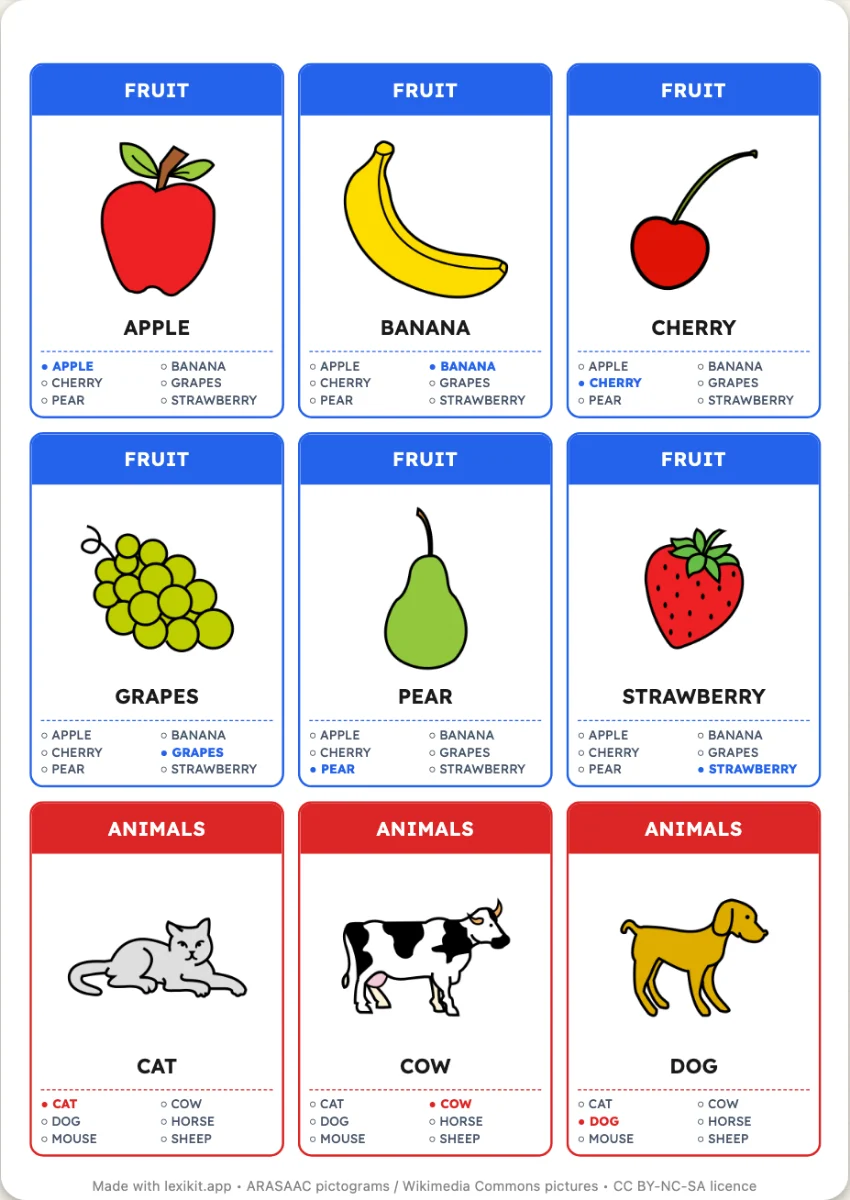
Lexikit now sorts words into categories, such as animals, clothes, fruit or jobs, for sorting and finding the odd one out.
Sorting words by category makes them easier to understand and remember. What research says, what the curriculum asks for, and what Lexikit does with it.
“My picture dictionary” makes a booklet with a cover, a contents page, then a chapter per category.
The “Taste” theme gathers the flavours, the foods and the words to describe what you taste, to prepare Taste Week.
A link carries your resources, folders, words and settings to another computer or a tablet, with no account.
From back to school to the school fair, 22 themes can be downloaded for free as a picture dictionary, bingo and memory game.
Cards, labels and the picture dictionary can show each word's translation in one of about thirty languages, from Arabic to Ukrainian.
A resource or a word list can be sent to colleagues or to parents by a link, with no account or sign-up.
Settings › Fonts accepts a font you already have. It becomes the cursive or print handwriting of your resources.
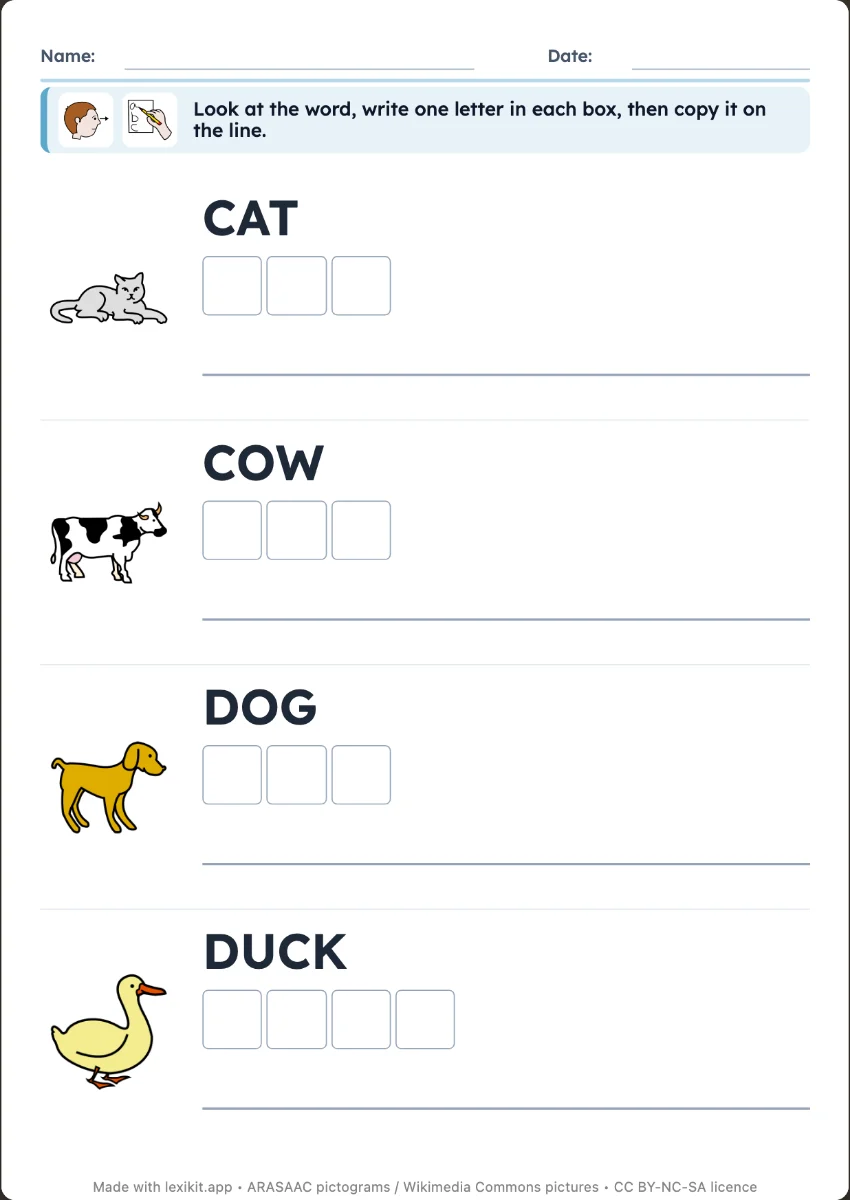
Writing worksheets use real exercise book rulings, Seyès, double line or single line, printed to the millimetre.
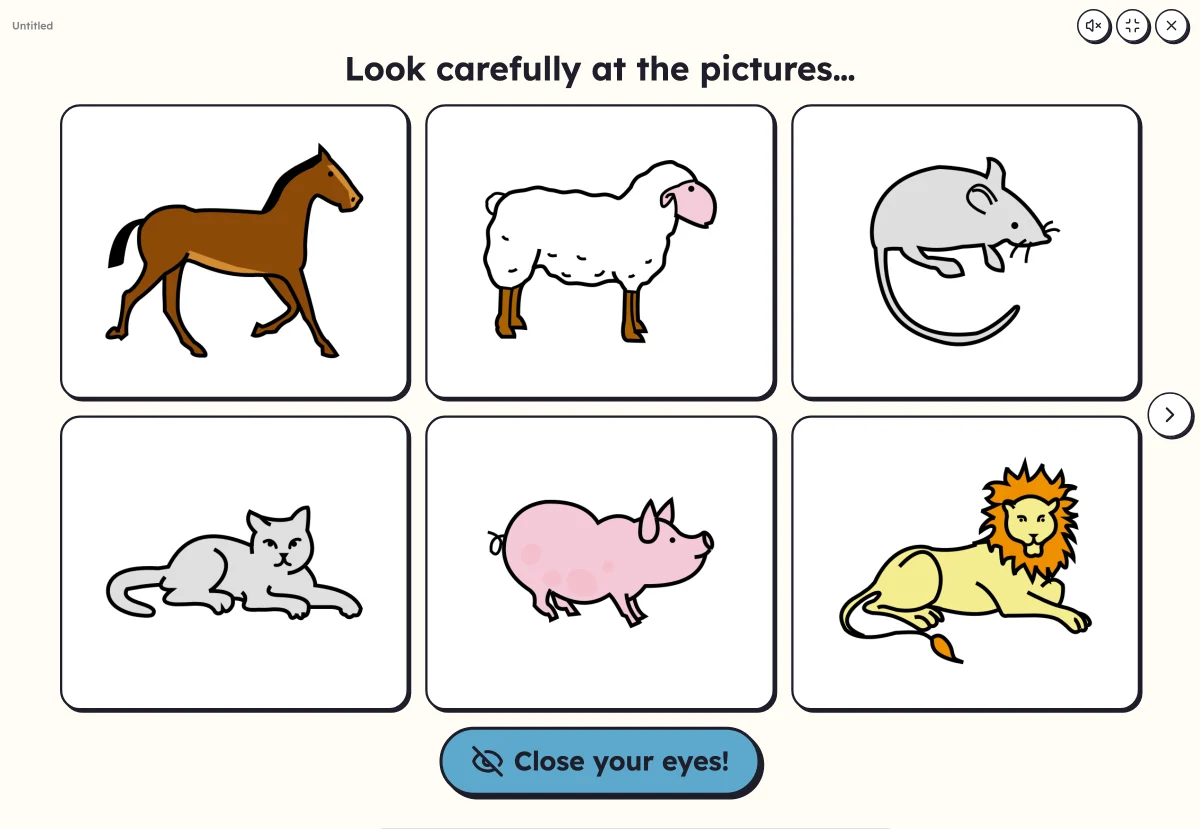
Nine activities can be played together on the classroom screen, including “Where is…?”, “What's missing?”, “Hidden picture” and “Sort into columns”.
The “Start from a theme…” button fills an empty resource with a ready-made list, drawn from preschool vocabulary lists.
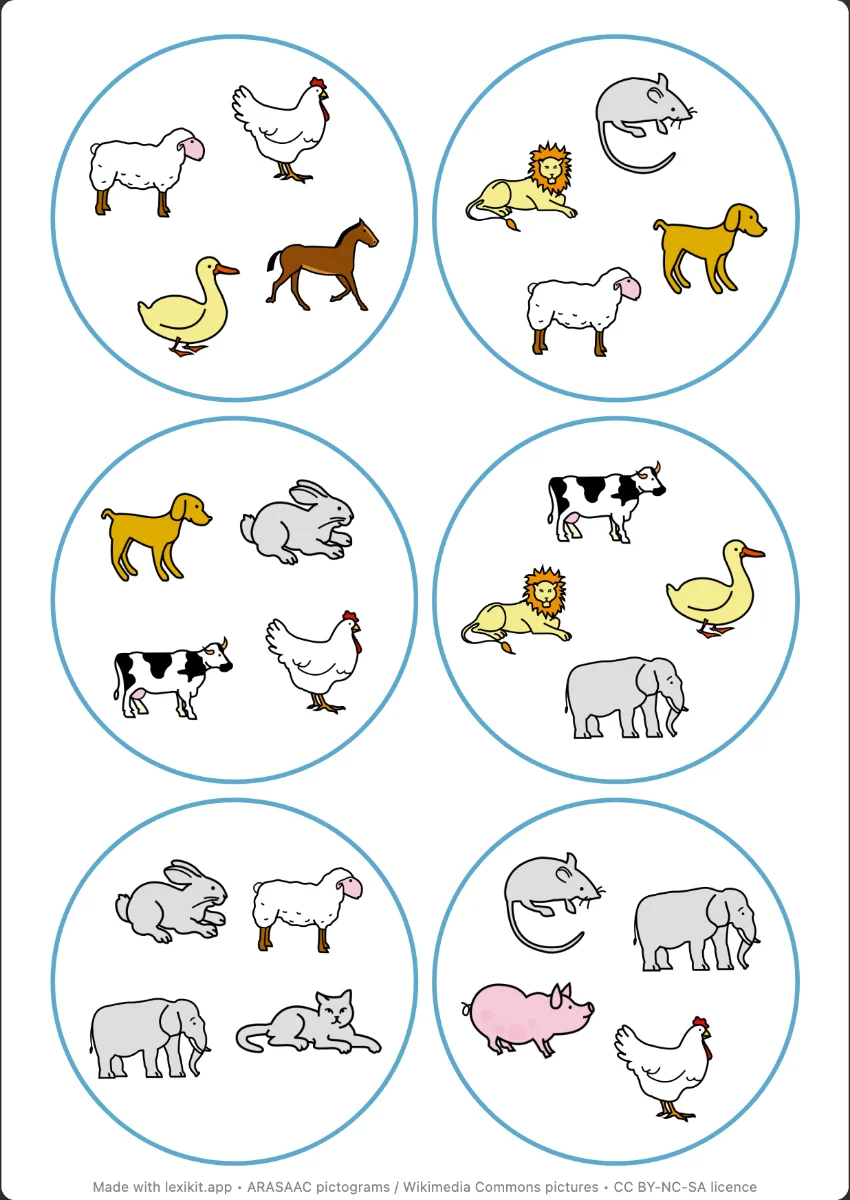
Six games print from your words: a Dobble-style game, dominoes, puzzles, clothespin cards, a goose game and labels.
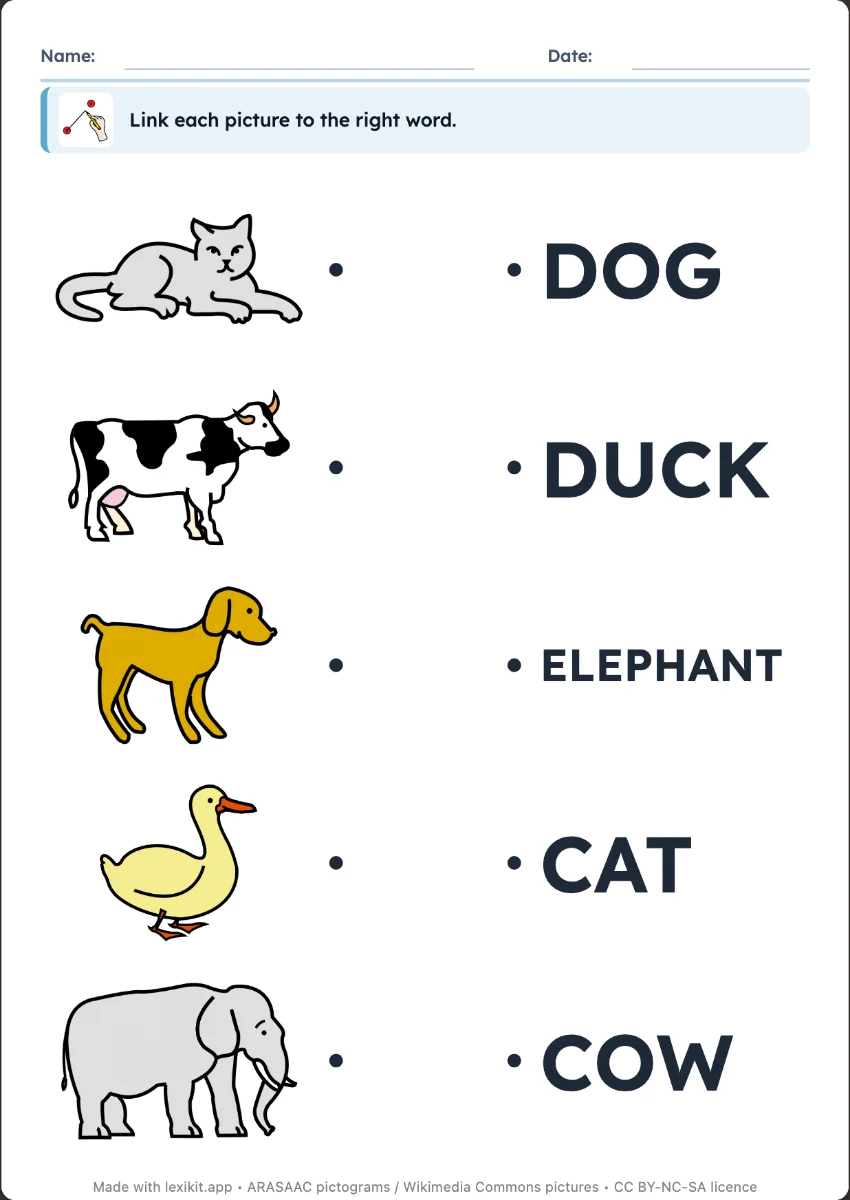
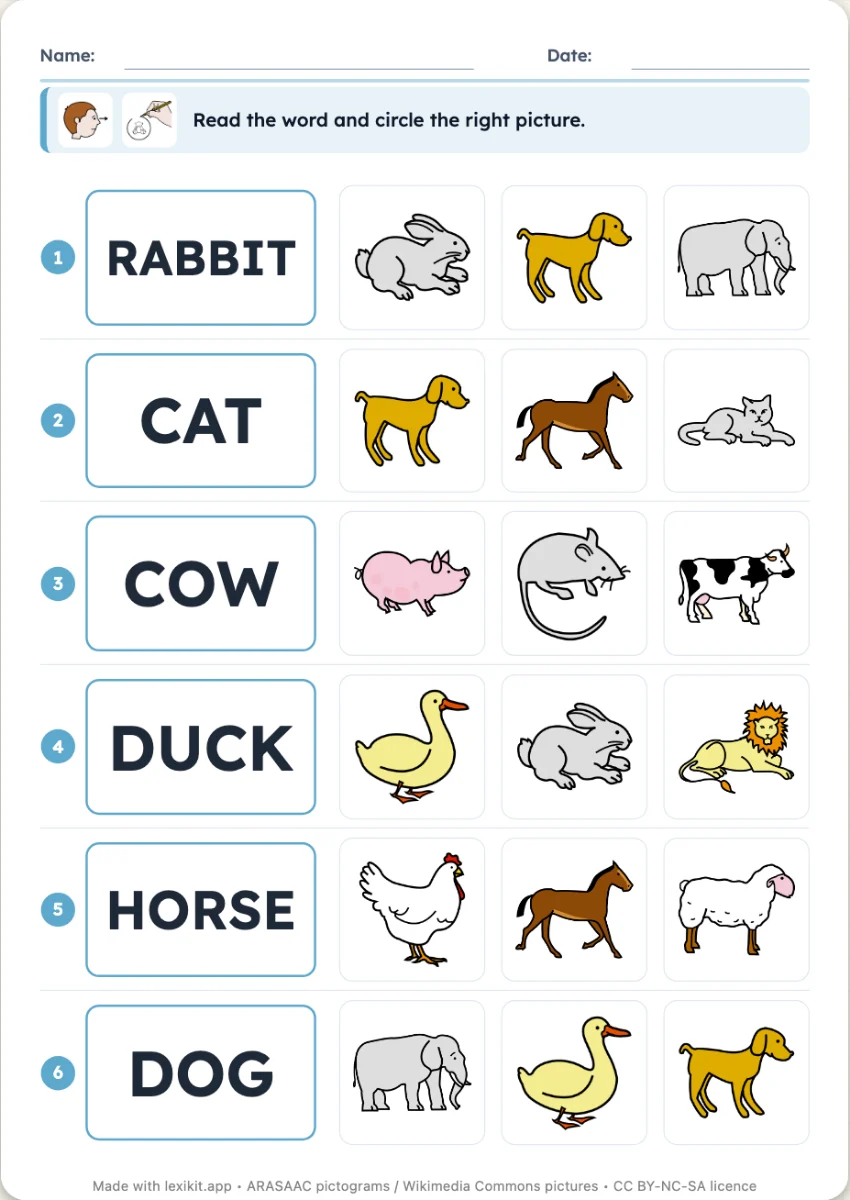
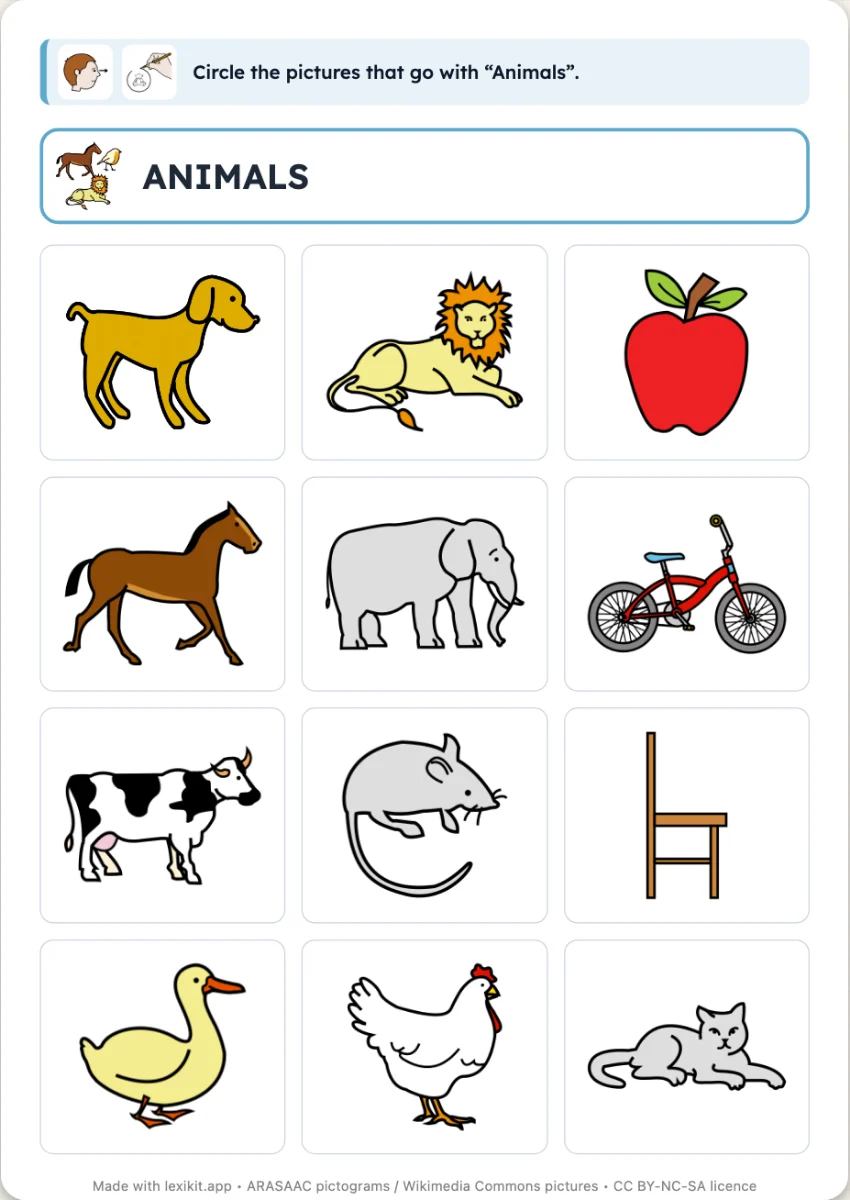
23 worksheets fill themselves with your words and print in the same frame, from writing to numbers.
A word is learnt by meeting it often, in varied situations. That is why Lexikit starts from a single list of words for every resource.
A sentence resource to cut out and put back in order, with a colour for each part of speech.
Each word can show its syllables in colour, on every resource, as an aid to reading and splitting words.
The built-in lexicon of Lexikit gathers 16,000 words and 14,000 ARASAAC pictograms, ready to use.
Lexikit always pairs a word with a clear picture and its pronunciation. What the Eduscol guide of 2020 asks for, and what memory does with it.
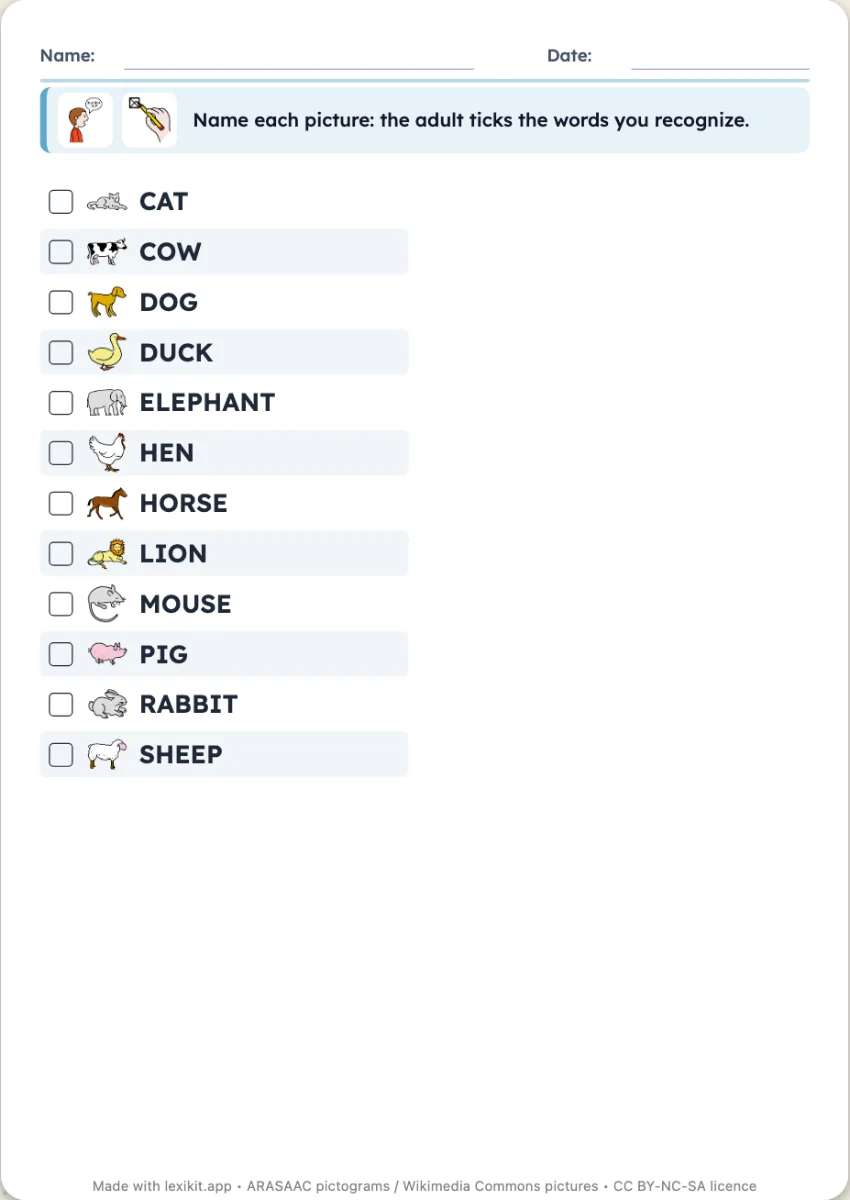
The assessment grid shows the pictures of the words worked on, each with its boxes, ready to fill in.
The first version of Lexikit turns a list of words into a bingo to print as a PDF, with the pictures of the words.
No article of this type for this date.
Open Lexikit, write your words, choose a resource. All that is left is to print or to play. Free, no account, and your words stay on your device.
Open the app