Two voices, for words and for syllables
The device's voice reads the words and the instructions. A second voice, MBROLA, says each syllable as it sounds within the word.
Lexikit now speaks with two voices. The voice of your device reads the words, the sentences and the instructions. A second voice, MBROLA, says the syllables and the sounds. Each one is set in Settings › Voice.
The problem with syllables
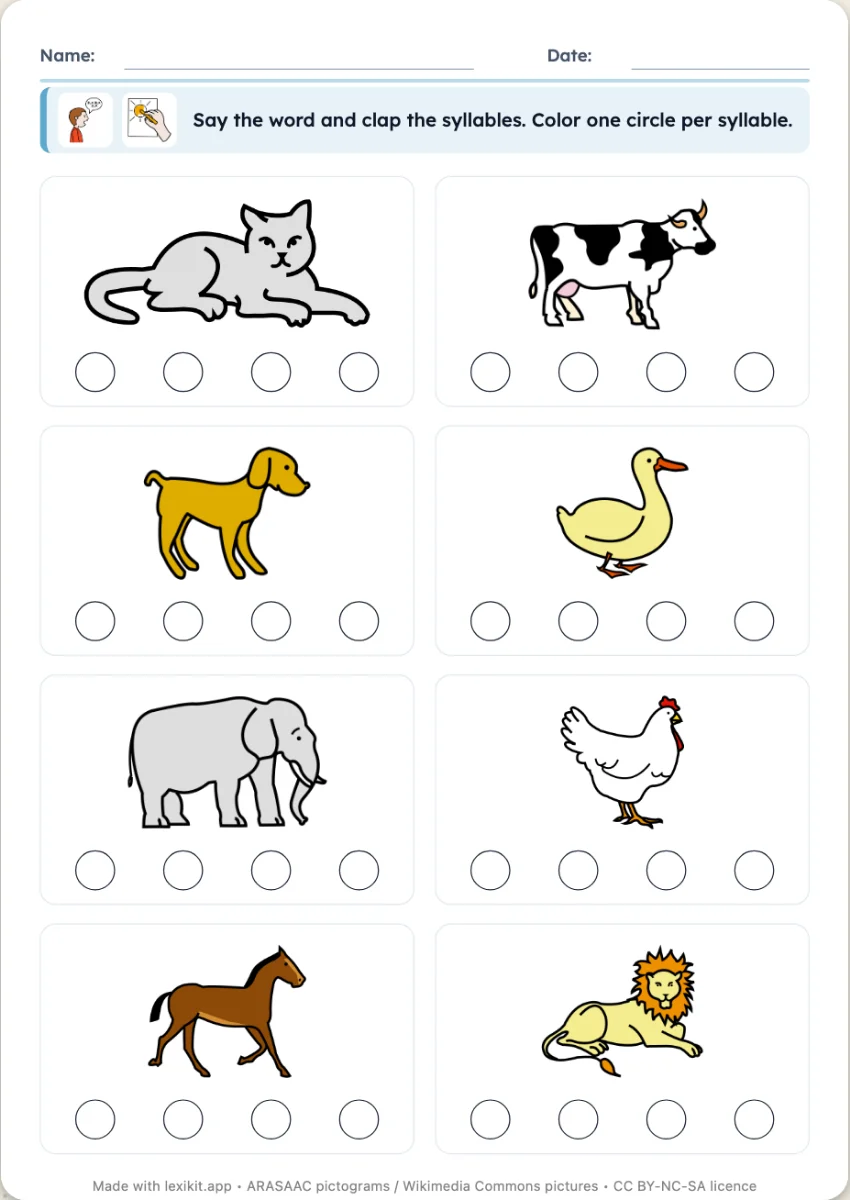
A synthetic voice reads a whole word well, because it learnt from sentences. A syllable on its own is difficult for it. It reads it like a written word: it spells out “za”, says “ilo” for the end of “îlot” (islet), or swallows the sound. In an activity where the child claps the syllables of “toboggan” (slide), these errors make the exercise impossible.
What I tried first
My first idea was to have the voice say a real word with the same sound. The syllable “gan” of “toboggan” sounds like the word “gants” (gloves), which the voice reads without hesitating. This method often works, but not always, and many syllables have no twin word.
I then tried a bank of syllables recorded in advance with Piper, a free synthetic voice. The result was worse than the device's voice: wrong or swallowed sounds, a choppy delivery, and two different voices in the same activity. I gave up on this approach.
Why MBROLA
MBROLA is a speech synthesis project born in the 1990s at the Faculté polytechnique de Mons, in Belgium. It guesses nothing from the spelling. You give it a sequence of sounds with their length, and it joins them from small recorded pieces of human voice, the diphones. So it says exactly the syllable it is asked for, as it sounds in the word.
The pronunciation of each word comes from Wiktionary. Lexikit cuts it along the word's syllables, then MBROLA says each piece. The engine runs in the browser. Its voices, in French, English, Spanish and Arabic, download only the first time they are used.
A slightly mechanical voice
MBROLA sounds a little mechanical. Whole words therefore stay with the device's voice, which is more natural. If a pronunciation does not suit you, you can record your own, for the whole word or for a single syllable.