A picture, a word, a voice
Lexikit always pairs a word with a clear picture and its pronunciation. What the Eduscol guide of 2020 asks for, and what memory does with it.
In Lexikit, a word always comes with its picture, and soon with its voice. This choice follows the French Eduscol guide on preschool vocabulary.
Two paths to retrieve a word
A word paired with a picture can be retrieved by two paths, the word heard and the picture seen. The Eduscol guide on teaching vocabulary in preschool (2020) turns this into a rule for the classroom: “Retrieving information is made easier by a picture, a drawing or by recalling the situation experienced” (page 31, translated from French). It asks teachers for tools made of pictures and varied cues to bring back words met before, and, for pupils who cannot read yet, tools that “will only use pictures” (page 38).
A picture that shows the right word
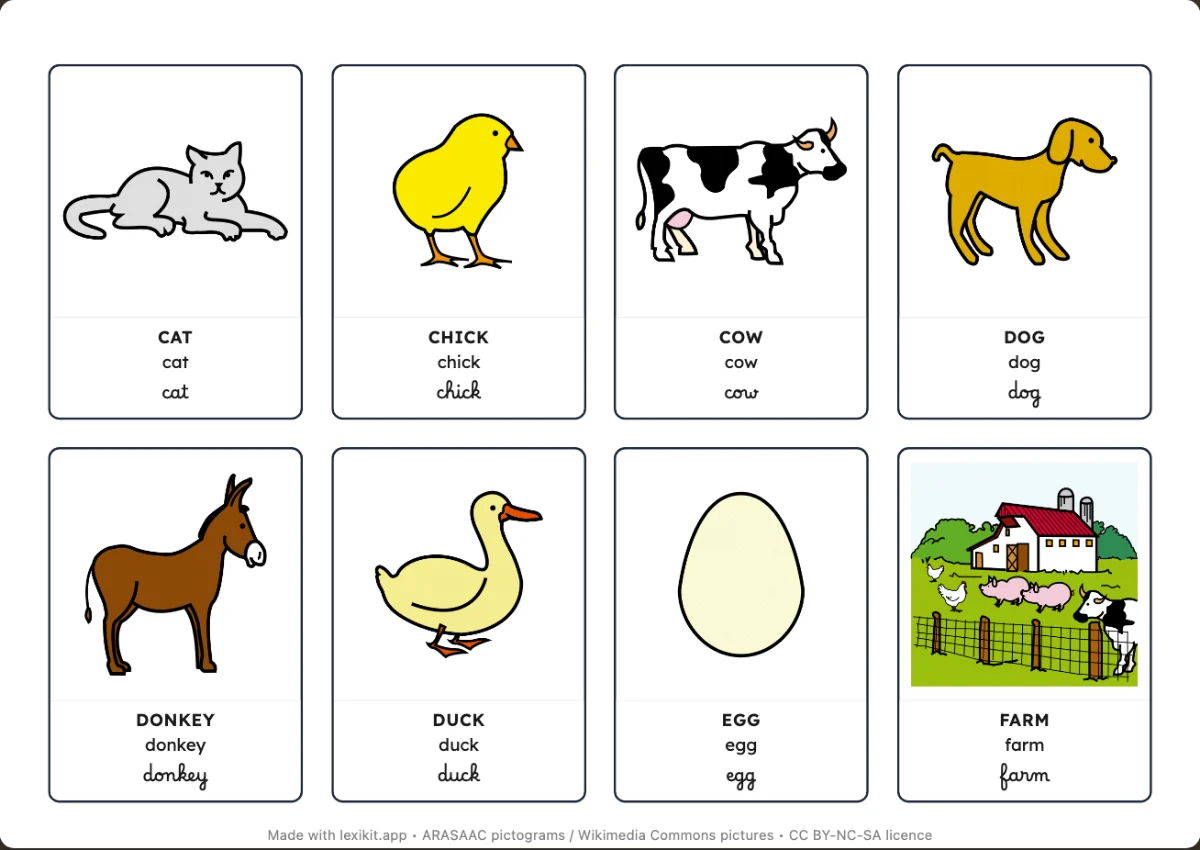
The picture must show the right word. A photo full of details can draw attention away: on the photo of an apple in a kitchen, the child may look at the table. A clean pictogram shows only the object. Lexikit starts from the ARASAAC pictograms for this reason, and each word can receive another picture when this one does not fit.
And the written word
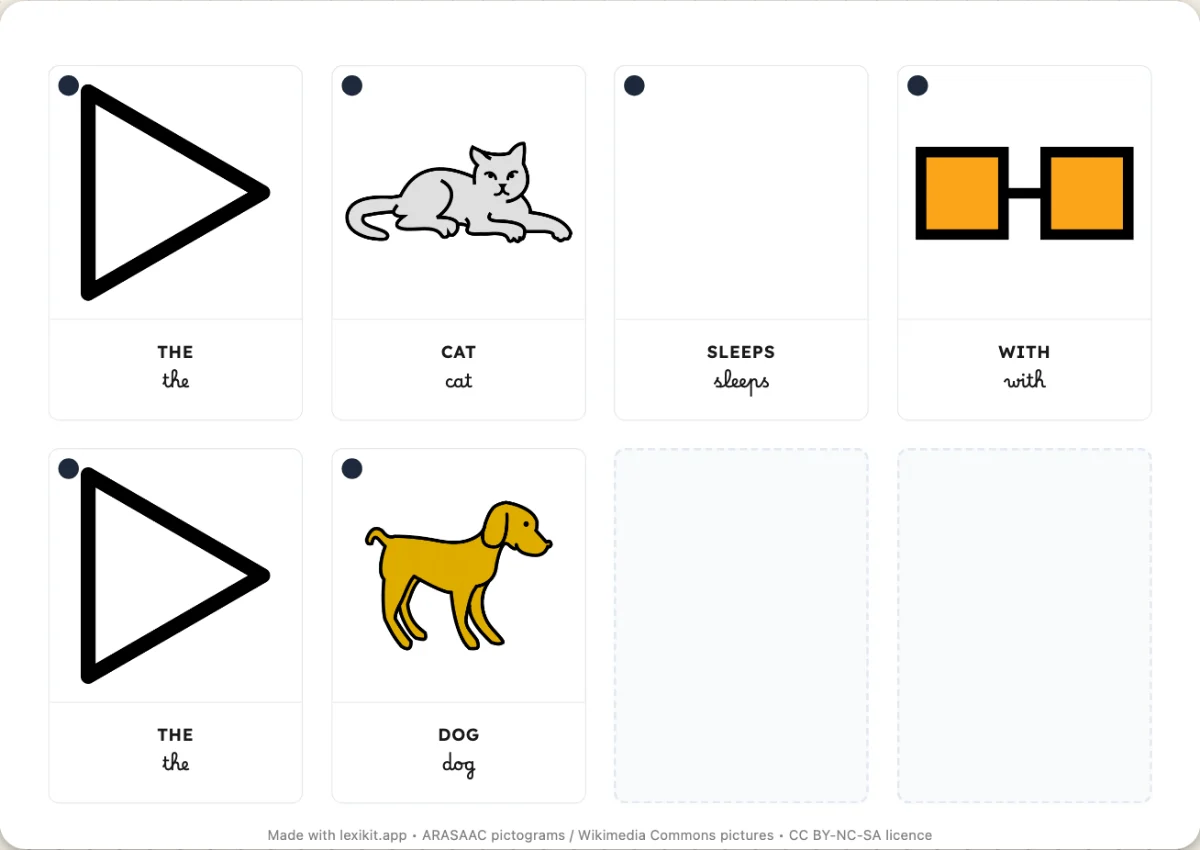
The picture gives the meaning, but it does not replace the written word. On most resources of Lexikit, the word is written under the picture, in the chosen handwriting. The child who cannot read yet still sees it, and gets used to the idea that a word is written. Since 17 October 2026, cards, the picture dictionary and the words of the week can also show the picture alone, with the “Written word” option, for a class that does not read yet.